
Ed O’Brien’s ‘Blue Morpho’: Transcendent, Soul-Nourishing Listening
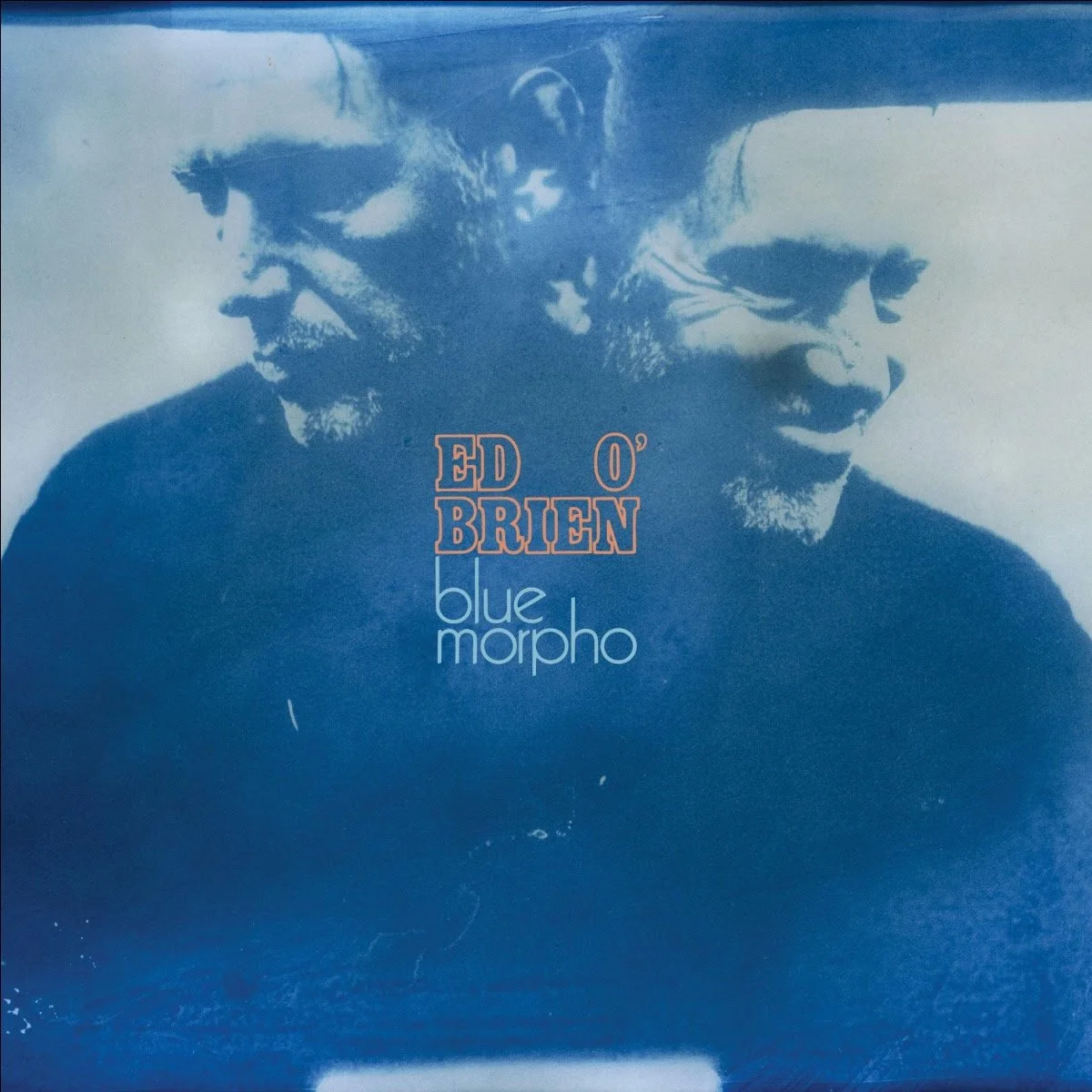
Ed O’Brien’s ‘Blue Morpho’ album artwork, a 7-track record which is out today via Transgressive. Image credit: Stay Golden PR
‘The undulating rhythm between pain and peace is a theme that flows through the album like running water.’
Long an admirer of Wendell Berry, Ed O’Brien quotes the Kentucky poet and farmer, “To know the dark, go dark.” ‘Blue Morpho’ treads as carefully as a walk in the deepest, darkest forest, navigating the invisible branches that line the path ahead, real or imagined.
The second solo project from O’Brien, and the first release under his own name, the 7-track album drifts from hypnotic psych-folk to bouncing trip-hop to head-banging groove to pure orchestral bliss… though the emphasis here is not on creating genre-box-ticking music. It’s a sonic wander through the mind of one of the UK’s most recognised and rewarded guitarists, written across four years between commitments with ‘the day job’, or to us mortals… Radiohead.
Made more magical through much of its collaborative and artistic serendipity, ‘Blue Morpho’ is nature’s best apple. Well-rounded without suffering the fate of perfect symmetry, it’s a circle of wonder and exploration with acidic bite at its core.
‘Blue Morpho’, produced by Paul Epworth, is released today via Transgressive Records. Read on for TOPNOTE’s review of the album.
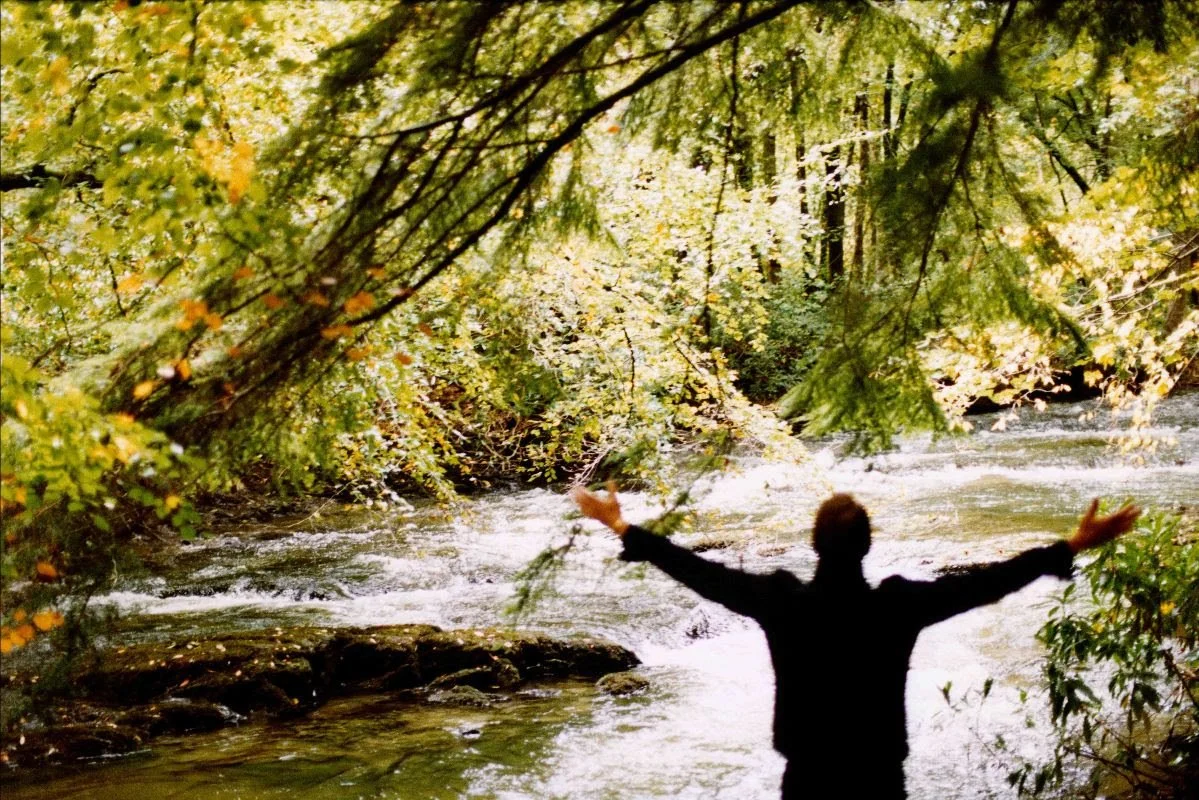
Ed O’Brien’s new record is inspired by the healing powers of nature. Image credit: Steve Gullick
Though O’Brien has previously revealed the album’s title was not an intentional reference to the equatorial butterflies he remembers being surrounded by whilst living in Brazil, the listening experience is similarly delicate and transformative.
Working with director Kit Monteith, a short film ‘Blue Morpho: The Three Act Play’ was made in the Welsh woods, close to the home and studio where the first threads of ideas were pulled and plucked from relentless, therapeutic writing sessions that became a kind of meditative therapy for O’Brien, who at the time was suffering his ‘dark night of the soul’. Interspersed with interviews discussing the musician’s experience of depression, the film follows its protagonist on a nature walk, collecting elements to bring towards a ritualistic fire. The film, as the album, follows the habitualism of the three-act play… of life: set-up, conflict, resolution.
Opening track ‘Incantations’ starts barely more than a softly strumming guitar, led into a chorus of chanting voices that begins peacefully, before building to a place of despair, and then falling back again. The undulating rhythm between pain and peace is a theme that flows through the album like running water, though the balance of weight shifts in its final track, ‘Obrigado’.
‘Blue Morpho’, the album’s title track and first single, is a string-led symphony of natural wonder. It’s hard not to picture the fluttering of a thousand electric blue wings lifting off a glimmering rainforest. But this song too ends with a kind of tension — the casting shadows of the closing daylight, the rising of the moon and the wind – before its final notes quell the uncertainty and spread birdsong through the listener’s ears.
It’s in ‘Teachers’ where the album reaches its promised central conflict. Kidnapping the listener from their trance-like state, a soft drum-and-bass rhythm arrives with as much sense and clarity as the plot twist in a dream that somehow always makes sense in the moment. The crystal contrast of sounds brings rejuvenation despite its undercurrent of turmoil. It features some of O’Brien’s clearest vocals, where conversely elsewhere in the record they fade into a murky, diluted background. The clash of instruments in the album’s middle point unravels into a purely felt loosening of the rational mind, and you’re swept into the eye of O’Brien’s internal storm.
“Though O’Brien has previously revealed the album’s title was not an intentional reference to the equatorial butterflies he remembers being surrounded by whilst living in Brazil, the listening experience is similarly delicate and transformative.”
In this album’s grande finale, then, its Portuguese ‘thank you’, gratitude and resolution are given in abundance… but not before the cleansing tonal echoes of ‘Thin Places’. Layers of strings and woodwind, arranged by composer Tõnu Kõrvits and performed by Estonia’s Tallinn Chamber Orchestra, float between flutes arranged by Shabaka Hutchings. A pure expression of sound healing, this two-minute track is a soothing balm for the mind – a valuable addition that came about after a discussion between Hutchings and O’Brien at Glastonbury, on frequency and natural resonance.
“Steeped in spirituality, the experience of tuning in to ‘Blue Morpho’ is transcendent, skipping the conscious part of our listening brain, and touching something further back. If you’ve ever sat overlooking a viewpoint or at the top of something expansive and thought, ‘what would be the perfect music to listen to right now?’ – here’s your answer.”
From there, the energy is restored to dive into the pool of ‘Obrigado’, a rich and textured story of radical acceptance just shy of ten minutes. With a similarly existential essence to Pink Floyd’s ‘The Great Gig In The Sky’, Ed O’Brien closes his album with a declaration to confidently counter personal fears that he’d only ever be ‘that guitarist in Radiohead’.
*
Steeped in spirituality, the experience of tuning in to ‘Blue Morpho’ is transcendent, skipping the conscious part of our listening brain, and touching something further back. If you’ve ever sat overlooking a viewpoint or at the top of something expansive and thought, ‘what would be the perfect music to listen to right now?’ – here’s your answer.
‘Blue Morpho’ is out now, available on streaming, CD, cassette, and LP. Tickets remain for Q&A events happening across the week in Leeds, Cardiff and London, with a live UK & Europe tour in October culminating in a sold-out show at The Barbican.