
An Evening With Ed O’Brien: ‘Blue Morpho’ Film And The Human Condition
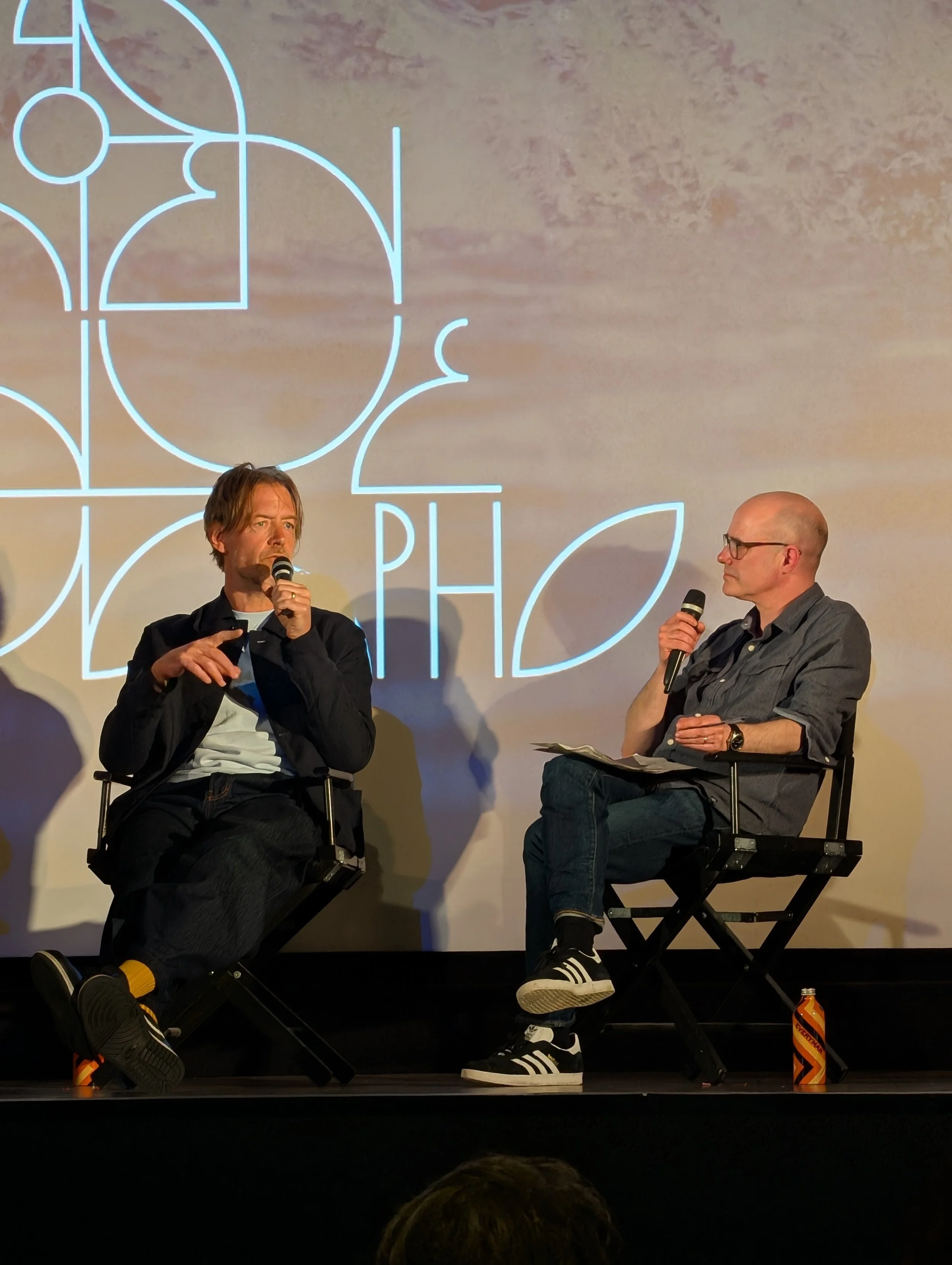
Ed O’Brien yesterday screened the film for upcoming EP ‘Blue Morpho’ with a Q&A led by Dorian Lynskey Image credit: TOPNOTE
The film lays bare the EP’s theme of healing in nature, drawing out the magnificence of Ed O Brien’s deep blue music,and providing the catalyst for him to beautifully articulate its meaning.
In one of the UK’s oldest cinemas, glacier blue crystals decorated the seats and set the scene for those lucky enough to be invited to Ed O’Brien’s London film screening of ‘Blue Morpho: The Three Act Play’. A 16-minute short directed by Kit Monteith, the film was produced for Radiohead’s guitarist's second solo project, ‘Blue Morpho’, shown yesterday ahead of the EP’s May release.
There was standing room only towards the rear of the grand venue for the film screening, before director and musician were welcomed warmly to the stage for a fascinating Q&A, led by journalist Dorian Lynskey.
What followed was a deep-blue, deeply interesting dive into soul and spirit. Read on below.
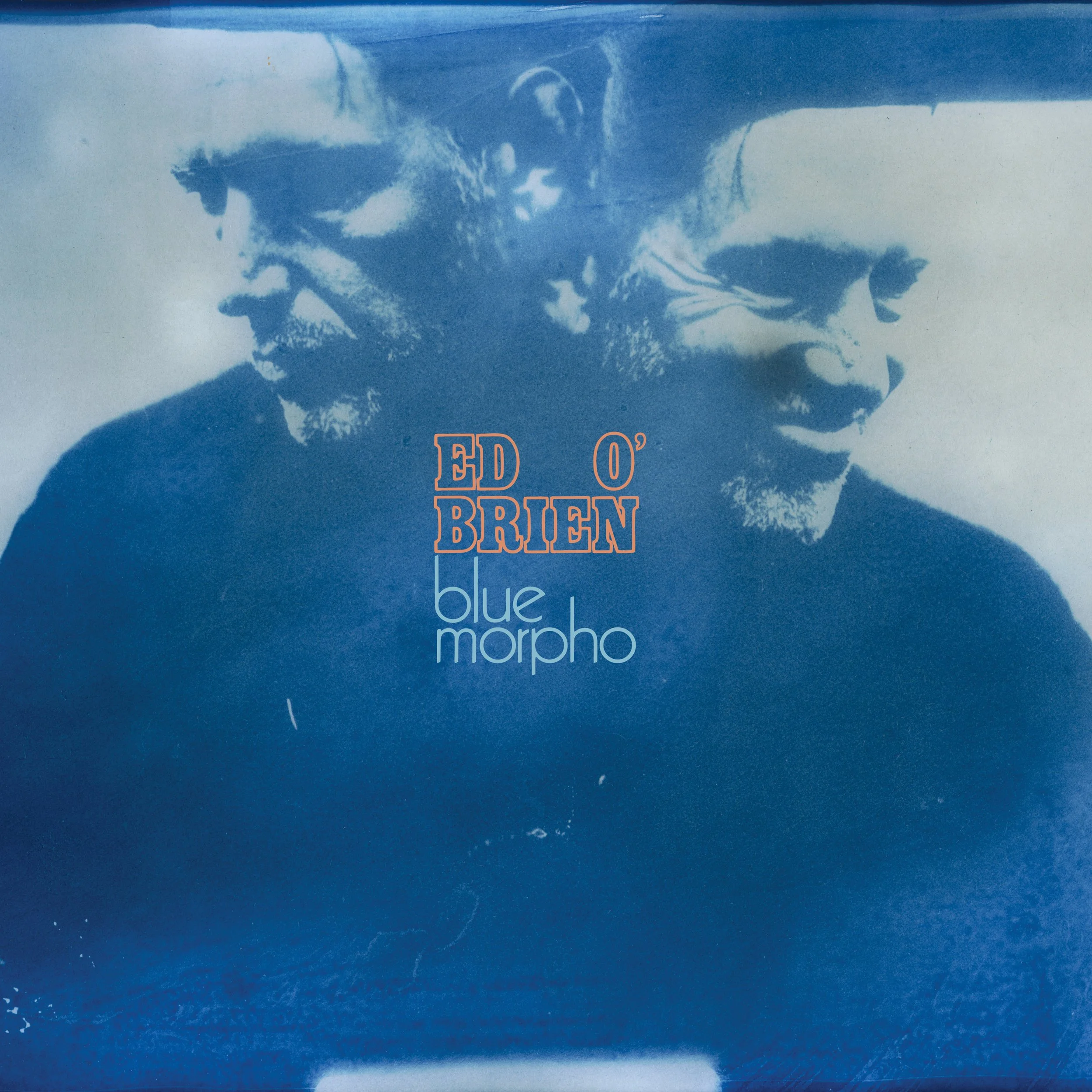
‘Blue Morpho’ EP cover art. Image credit: Stay Golden PR
‘Blue Morpho: The Three Act Play’ takes us along a walk in luscious, babbling woods, as O’Brien collects moss, wood and stone, revealed later as offerings for a flaming ‘ceremony of thanks’. Split into three distinct parts, the last section of the film, director Monteith says, mirrors the album’s final track ‘Obrigado’; Portuguese for ‘thank you’ (and a remnant of O’Brien’s time living in Brazil). The film is soundtracked with musical passages, intercut with snippets of O’Brien on his experience wih depression, taken from an interview on the first of three days filming in his Wales home, where many of the EP’s initial ideas were recorded.
Sat on stage after the screening, O’Brien spoke exceptionally eloquently about what he referred to as his ‘dark night of the soul’ and the ‘universality’ of such complicated experiences. He challenged the default to feel embarrassment or the urge to keep running away from troubled memories.
“We call it mental health… but mental health doesn’t feel like an adequate description, it’s something way deeper than that. It’s a crisis in your soul. Mental health is just like a bureaucratic label in a way, it doesn’t register the depths that people go to.”
‘With this music, it’s better to be impressionable, not to fill in, not to have all the answers’ O’Brien says, though reiterated across the evening’s discussion, nature is the core concept. Ed reflected on pandemic days stuck ‘falling’, and his healing accelerated through playing guitar, meditating, and finding a sense of stillness and spirit from his time in nature. ‘The woods are my cathedral’, he articulately puts it.
“O’Brien spoke exceptionally eloquently about what he referred to as his ‘dark night of the soul’ and the ‘universality’ of such complicated experiences.”
“The three act play mirrors life, it’s the journey of us as human beings… It’s like alchemy. As musicians, we take this darkness – and there’s a beauty in darkness. When you really sit in it, there is a beauty, because it’s raw.”
Referencing Radiohead as ‘the mothership’ or ‘the day job’, talk drifted to his capacity as a solo artist, and the universal creative process: ‘This is great. This is ok. This is shit. I am shit. This is okay. This is great.’ The audience laugh with him over a retelling of a well-intentioned conversation with an unnamed label manager during his ‘I am shit’ phase: ‘I think this is a really good album… but have you ever thought of it as an instrumental without your vocals?’
But, Lynskey counters, this is the first release under his full name, rather than the previous ‘EOB’ pseudonym for first EP ‘Earth’ — where O’Brien acknowledged that he’d been ‘hiding’; suffering a crisis of confidence.
“Am I [just] gonna be that guitarist in Radiohead – that other one? Who am I fooling? I can’t do it on my own!”
“An interesting audience question posed if O’Brien wondered whether he’d receive less sympathy, given his illustrious career in one of Britain’s most influential alt-rock bands of all time? ‘I’m very aware that I’ve won the golden ticket in life’ O’Brien mused, before a pause. ‘But… I was depressed.’ ”
An interesting audience question posed if O’Brien wondered whether he’d receive less sympathy, given his illustrious career in one of Britain’s most influential alt-rock bands of all time?
“I’m very aware that I’ve won the golden ticket in life’ he mused, before a pause. ‘But… I was depressed.’ He continued, ‘I’m not looking for sympathy… The dark night of the soul, it’s like the death of ego. I don’t care what other people think anymore. It’s so nice to have something out that feels really me.”
Both Kit and Ed referred to serendipity across the album and filmmaking process, from meeting collaborators to the name itself. ‘Blue Morpho’ is a species of butterfly that O’Brien vividly remembers on his entrance into the Brazilian waterfall-laden rainforest he had just arrived at, soon to call home.
“When I connect with music that I love or music that comes through me, it’s very visual. That guitar motif was something that suddenly felt like this butterfly. That’s what it is – it’s the music from that time. And of course, which I didn’t realise, there’s an analogy with the butterfly. In ancient Greece, the word for butterfly is ‘pysche’, and that also means ‘soul’. The ancient Greeks held the butterfly in high esteem because they saw it as a representation of the journey of the soul. You’ve got the caterpillar, the pupa, where it goes into the darkness. And when it’s in that place it has to eat itself, the body has to disintegrate, and then it becomes a butterfly.”
Director Monteith revealed to O’Brien on stage that he’d experienced his own period of difficulty, and that the project fell into his lap at the perfect time, resonating with him as much as it had done for its creator. And then, as though permission had been granted, hands popped up in the audience, with others keen to share which ‘act’ of the play they currently found themselves in.
Upon lights up, a very British queue began to form, of attendees patiently lining up to speak to the man of the moment. Anticipating a long wait, I decided not to join the end of it – disappointed though I was.
But, I had put my wallet on my lap in the cinema, and subsequently left it there, tucked between the seat fold…
And so it was that I found myself back in the venue twenty minutes later, and the very last person in the slowly shrinking queue to speak to Ed O’Brien, having found my wallet and missed my train, allowed briefly to enter into the world of serendipity so pivotal to this project.
O’Brien spoke sincerely with each person before me, truly taking his time to hear how they’d connected to his music, and responding with audible gratitude and interest.
What does the colour blue mean to you? I asked him, the cinema now almost empty and dim with chatter.
“Blue is the colour of water. Each record that I make has an element, the first one was obviously earth, this was water. Water is a symbol of grief, but also purification, and of spirit. It’s very symbolic, that colour.”
I suggested that the EP is a strong contender for album of the year, a claim I’m happy to cement in print. ‘Blue Morpho’ is a wonderfully considered work of art, the kind only possible when borne from true introspection, reaching a personal depth that not all have the privilege of being ‘ambushed’ by, as Lynskey described it.
The ‘Blue Morpho’ EP is out in May, and the single of the same name is available to stream now.