
In Chuck Timely & The Hourglass, ROLE MODEL Revisits Optimism: Review
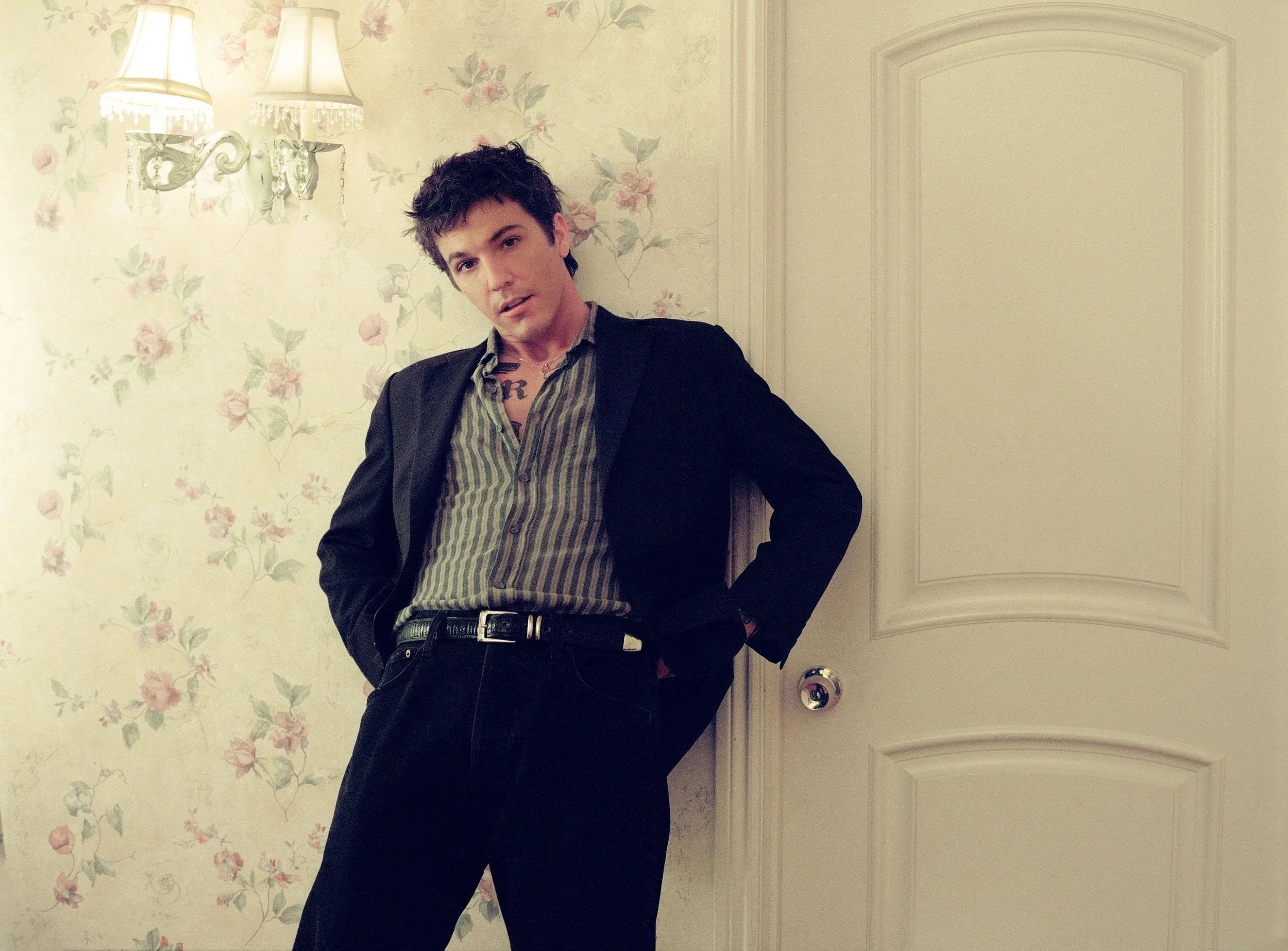
Role Model releases third album ‘Chuck Timely & The Hourglass’ on 7th August 2026. Image credit: Chloe Chippendale
‘I am deserving of something real, something true, someday soon.’
This is how ROLE MODEL (or should we refer to him as Chuck Timely?) begins his album… in an echoed, a cappella intro that unfolds into positive affirmations via gospel-folk.
If you’re wondering who Chuck Timely actually is, he’s an invented personification of time. And even imaginary time-travellers have their own Instagram accounts these days, for those intrigued enough to learn more about his legendary lore. Born from a desire to centralise the record’s key themes, Role Model’s third studio album and alter ego is a fantastic case study in world-building… but how does all the fanfare live up to the music itself?
The truth is that Chuck Timely… or ROLE MODEL… or Tucker Pillsbury (to use his real name) is effortlessly likeable, and his passion and talent pours through the speakers in ‘Chuck Timely & The Hourglass’.
An underdog mentality that made 2024 record ‘Kansas Anymore’ reach close to 320 million streams doesn’t appear any less self-deprecating on his third studio album, though this time round, he’s more willing to look for the sunnier side. The album’s two prior singles, ‘High Hopes 3000’ and ‘Joy’ are charmingly contagious – turning dead-beat energy into clap-stomp sidestepping bops, and much of the record follows suit.
Releasing tomorrow via Interscope, read TOPNOTE’s review of ‘Chuck Timely & The Hourglass’.
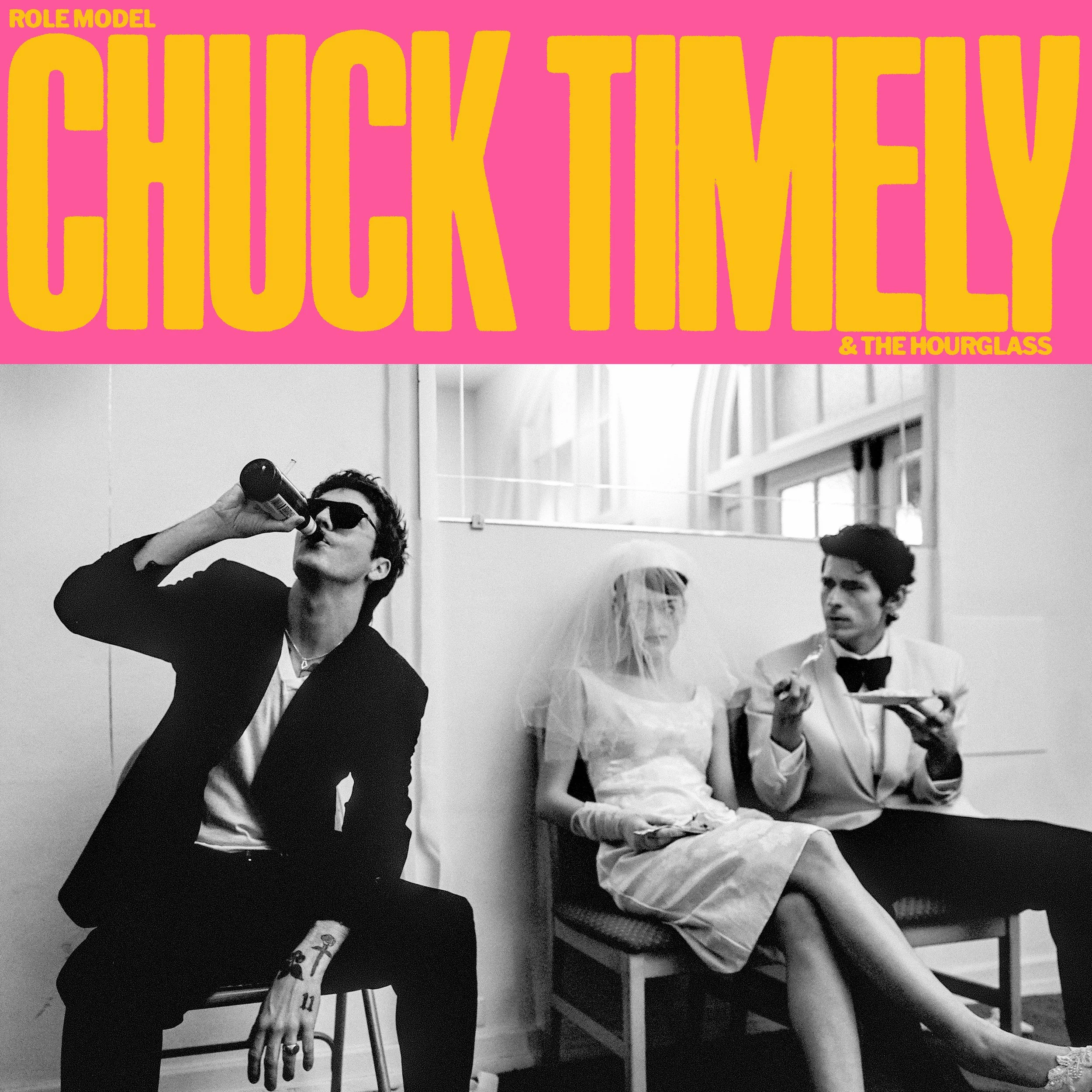
Role Model, ‘Chuck Timely & The Hourglass’ album artwork. Image credit: Chuff Media
For all his viral moments, highly speculated romances and A-Lister ‘Sally’ cameos, Pillsbury is an excellent songwriter. Most of these tracks tell a concise, coherent story universal enough to be relatable but specific enough to feel original, frequently slipping humour and double entendres into his organic knack for a woozy, wallowing cadence. ‘I’d like to surrender / to something other than a bartender’ he drawls in ‘Love I You’. The track, teased at recent shows, features a playful conversation with actor and partner Dakota Johnson, which Pillsbury recently revealed was not written specifically for her to perform.
Elsewhere, ‘Service Receipt’ is an emotional yo-yo of the singleton’s experience, swinging the listener from butterflies to hopelessness with each line.
As a whole, the album wobbles in and out of romantic tribulations like a tipsy walk down a straight line. In ‘Song is All You Get’, Pillsbury sifts through the options like love is a multiple-choice game, managing to avoid sounding clichéd or trite –‘sometimes you end up worse than before / but isn’t that something’.
“‘Chuck Timely & The Hourglass’ is a wistful summer dream; open fields of long grass and toes in water. At points it sounds like clumsy flirting, at others it sounds like two people staring dreamy eyed, and occasionally it’s a face-first fall into a puddle. ”
‘Good Thing’ is one of ‘Chuck Timely…’s softer moments. It could easily have been plucked from a crooning cowboy sitting on a roof with his guitar singing to the stars in an old movie, but there’s enough irony deposited in the album’s earlier tracks to escape the trope (spot the foreshadowing in ‘Song Is All You Get’). In this slow piano ballad, Role Model shows his most vulnerable side, surprisingly not in admitting his failures – by now, that’s what we expect – but by gingerly confessing his optimism.
‘Chasing Midnight’ borrows from Cinderella’s diaries, invoking flutes to paint a picture of garden party fantasies, and an interesting take that pulls romance out of one-night love affairs: ‘It won’t last once the sun starts coming back / but there’s some beauty inside of that’.
The flutes reappear in ‘Stain’, a bubbly West-Coast pop mantra for accepting and embracing that some things just don’t work (nor come) out. When he’s not directly addressing his muses, Role Model often sounds like a friend giving a pep talk: ‘well I’m sorry that it didn’t work out with your man / but there’s nothing fun in feeling like a back-up plan’.
From there we head to ‘The Wedding’ – the track most closely tied to the album’s cover art, which sees a vibe-killing Pillsbury sip a beer while the wedded couple look disapprovingly over. That’s exactly the song’s sentiment, which comes as a slight surprise after hearing Pillsbury’s romantic endeavours across the tracklist. ‘Last night I told myself that I’m never getting married’ he declares, while taking us along to a friend’s nuptials, (don’t worry fangirls, he comes around by the end of the song).
“The album wobbles in and out of romantic tribulations like a tipsy walk down a straight line.”
Across an album that hula-hoops pretty smoothly between folk, americana and pop, ‘Honeydew’ is where the record rolls over into kitsch, with swelling strings and overly grand drumrolls. Final track ‘Harmony’ expands on this old-cinema style, with a frustratingly predictable ending that ties up all the loose ends in oversimplified everything-happens-for-a-reason fashion. It invites slowly swaying hands and an arms-around-eachother, end-of-the-musical style feeling. As such, the album closer misses depth and subtlety and seems overly ‘sweet’ for the messiness portrayed and celebrated across ‘Chuck Timely & The Hourglass’.
‘Chuck Timely & The Hourglass’ Finds Fun In Temporality
Not without fault, Role Model has delivered his best album so far. ‘Chuck Timely & The Hourglass’ is a wistful summer dream; open fields of long grass and toes in water. At points it sounds like clumsy flirting, at others it sounds like two people staring dreamy eyed, and occasionally it’s a face-first fall into a puddle.
Chuck Timely deposits squirmish memories in hook-driven, carefree melodies, and it works well. The utterly confessional approach to songwriting is growing in prevalence among his peers, from Sombr to Alex Warren to Myles Smith. With this next wave of solo male artists, predictable iterations of masculinity in projections of bravado, indifference and dominance are more often becoming swapped for fearless declarations of anxiety, insecurity and regret. In many ways, Role Model is the perfect pop-star; disarming, non-threatening and genuinely talented.
If you love a double side-step with a clap, then this album’s for you. And if you don’t, you’ll probably enjoy it anyway.