
Britpop’s Back: Meet London Band, Happy Neighbours
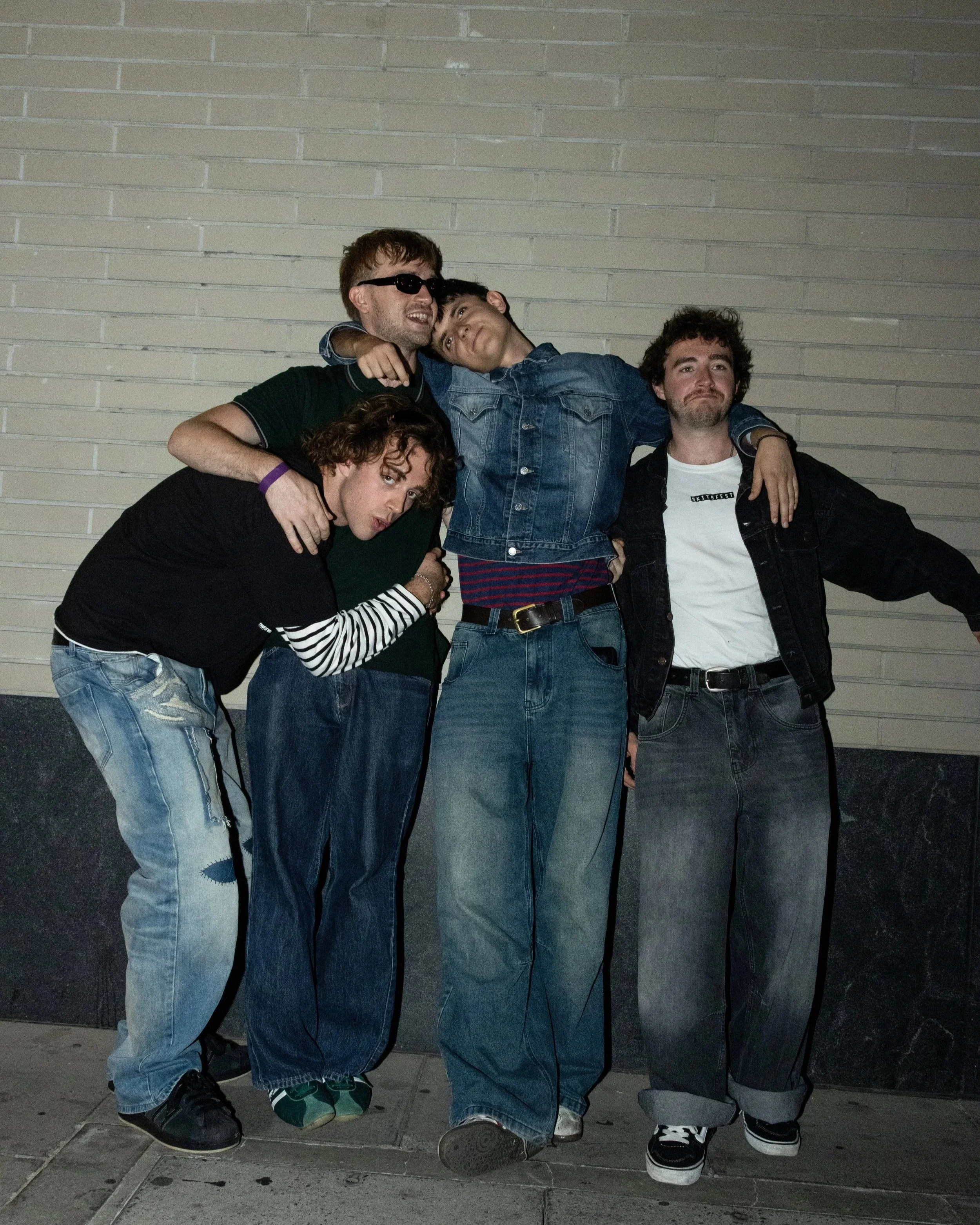
London-based Britpop band, Happy Neighbours, chats to TOPNOTE. Image credit: Maddie Gunton
Happy Neighbours on ‘social media slop’, how to avoid being a rip-off, and sharing a cigarette with Yungblud.
It’s unusual to interview an artist and be papped yourself. TOPNOTE could probably have been any magazine and the case would have been the same, but for a band very much at the beginning of their trajectory, you wouldn’t expect stepping outside for a chat would create such a buzz.
Facing the four-piece sat on a street curb to escape the soundchecks happening ahead of their headline show, a semi-circle of photographers, videographers and fans gather behind us. Many were introduced to the band through viral Chinese content creator Redli, who featured Happy Neighbours’ singer in a series of street interviews shared with 3 million followers, resulting in the band unexpectedly growing an East Asian fanbase. Throughout our chat, fans gingerly approach the street and wave, and the small audience remain, watching and filming.
Is this normal for you? No, they laugh, before remembering a recent dinner with fans pressed up against the restaurant window… ‘that was actually quite scary…’
Happy Neighbours are a bit like a British Laundry Day, though much, much more sarcastic. With only a string of singles and one EP to boot, The Britpop band are growing their fanbase primarily through sketches and skits on social media – like the mockumentary promoting their gig at The 100 Club, which sees frontman Harry Rumney in a diva storm-off, threatening to kick everyone out the band.

Happy Neighbours backstage at The 100 Club, ahead of their headline show on 08.08.26. Image credit: Maddie Gunton
‘That was real. That was completely real’ he laughs. ‘No, but there is probably, disgustingly, a tiny little bit of that in me, because we were talking about what we were gonna do when we walk out, in the sketch, and then today I was going how can I walk on [stage] and they were going, dude, you’re doing the bit.’
Harry’s bandmates seem content to let their frontman lead the conversation, though he encourages the naturally quieter members to share their takes too. In their sunglasses and denim ensembles, Happy Neighbours look like a band, and they’re starting to get familiar with navigating life as one.
“Since Oasis got back together… stuff like that happening has had a big impact and I don’t think a band like us would be selling the tickets we’re selling now, 20, 15 years ago.”
‘You kind of do have to use it as a tool really,’ Rumney admits, referring to the ‘social media slop’ that emerging artists often rely on in place of external funding and wider industry support. ‘We’re trying to find our place in that – what do we think is still cool? What do we think is going to be appealing to people, and what hasn’t been done 1,000 times already?’
‘Born from Britpop influences and riding the surf of the genre’s resurgence, the band’s individual favourites differ, but they converge on Blur. Drummer Henry Sullivan cites Supergrass, and the big dogs… Oasis. Bassist Jack Foley mentions The Clash, which support band The Rizz later cover during their warmup set.
But what makes Happy Neighbours different from their predecessors?
‘I think we’ve tried to amalgamate different artists rather than just taking one that has obviously done something that’s worked, and then just doing it again’ Rumney says.
‘We’ve developed a sound you can recognise as Happy Neighbours at this point. Sort of bright psychedelic, it can be quite heavy sometimes. But our consistency is a very summery sound, there’s definitely a shoegaze element in there’ adds Jack.
The band work with a small visual and management team, and maintain a heavily DIY essence.
‘I think it’s important to know the people you work with, and understand each other’ believes guitarist Harry Paddick. ‘When you know each other it makes for a more conducive working relationship, and environment in general. You get more done and you feel more inclined to do it because you’re spending time with your mates and you’re doing it for yourself.’
“‘I think we’ve tried to amalgamate different artists rather than just taking one that has obviously done something that’s worked, and then just doing it again.’ ”
‘Cons, I guess you don’t have the same level of contacts in the industry as someone who’s been working for 35, 40 years. They’re going to know more, know more people. But I think at our level, this is probably the best place to be’ concludes their frontman.
I ask whether Happy Neighbours intends to stay independent.
‘I think the idea is one day they’ll sell us off to some big scary label, and we will sell ourselves.’ Rumney grins. ‘Look at these smiles because…’
‘...they’re not lasting!’ the band erupt.
How would their sense of humour go down in America, I wander out loud. ‘Terribly’ they laugh, ‘god, they’re so… sad, and… dry, and… miserable!’
I reference Yungblud as someone who’s capitalised on his Britishness to become a stateside success.
‘I had a cigarette with Yungblud,’ posits Rumney, ‘...I was at The Hawley in Camden, he was there, I asked him for a lighter, and I sat there and had a cigarette with him. He was a really nice guy. D’you know what, I think that is actually, probably, his most defining quality.’
‘And his very, very sharp jawline’ adds Paddick, ‘…you could cut glass with that thing.’
Conquering America may be a little far off for Happy Neighbours, but what’s the next step? After hosting their most recent show with three other bands, the plan is to continue the mutually supportive ethos on tour, with rotating headliners across the country. In search of ‘new ears’, the quartet hope to play in the North, and release a couple more singles before the end of the year.
*
‘None of us are media trained’ Paddick grins, when I ask if there’s anything the world should know about Happy Neighbours, before Rumney tells everyone to lock in, and an earnestness appears behind the bravado.
‘I really really really feel like something is happening, and there’s been a shift in people’s interests, just in the country in general… Since Oasis got back together… stuff like that happening has had a big impact and I don’t think a band like us would be selling the tickets we’re selling now, 20, 15 years ago. I actually am very cheerful about life.’
Before the wider industry (or the band themselves) have had a chance to catch up, it’s evident that Happy Neighbours are tapping into something that’s working. A mix of deadpan humour, no-pretense attitude, and a music genre that’s enjoying a fresh popularity are all partly responsible, but the reality is, bands don’t get followed down the street unless something’s going right.