
YUNGBLUD’s ‘IDOLS II’ Goes Full Circle: An Artist Earning His Title
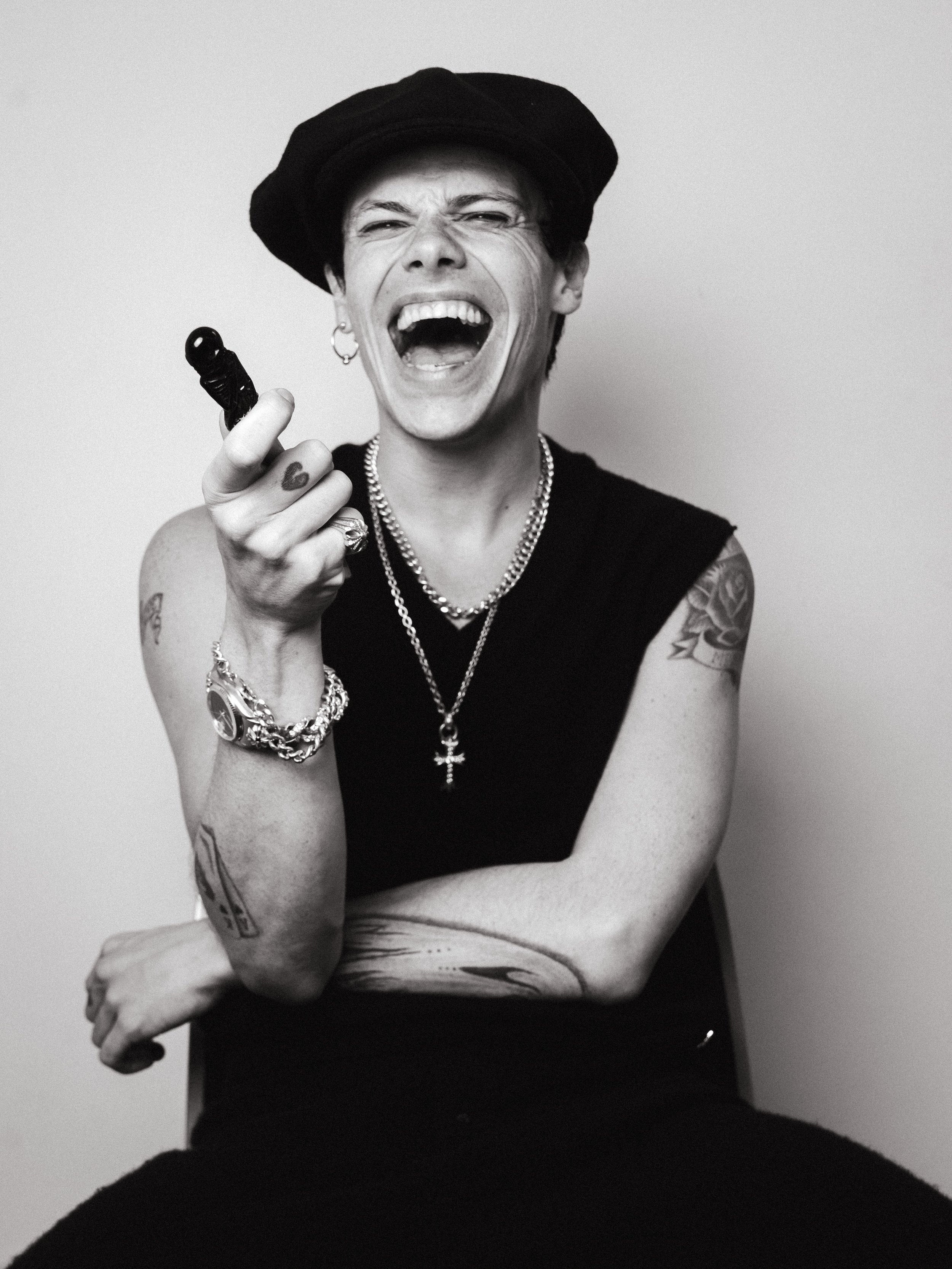
Yungblud - ‘Idols II’. Image credit: Chuff Media
“[Idols] Part 2 is about realising that I am alive, that I am real, that this journey that I’ve been on didn’t kill me. It’s about realising that you can feel invincible when you actually feel yourself… about comprehending that my heart is beating and that my lungs are filling up with air.”
’ – Dominic Harrison, aka Yungblud
Landing at No. 8 on our countdown of the Top Albums of 2025, ‘Idols’ wasn’t the only Number 1 album Yungblud scored last year. Partnering with Aerosmith in November, their collaborative EP ‘One More Time’ also clinched the top spot. Since then, rock artist Yungblud, or 28 year-old Yorkshire-born Dominic Harrison, has become the first British artist in history to earn three nominations in rock categories in a single year, taking home the title for ‘Best Rock Performance’ last month.
To put it plainly – he has become an idol.
Released today via Island Records & Locomotion, the second installment of the Number 1 album ‘Idols’, released in June 2025, features six brand new songs, led by single ‘Suburban Requiem’.
‘Idols II’ is a petrichoral expression of self-discovery that expands on the themes of its predecessor with a fresher outlook. It’s an uplifting listen that sounds like spring, with a euphoric ending experienced as a deep breath of clean air. Read our review of the new tracklist below.
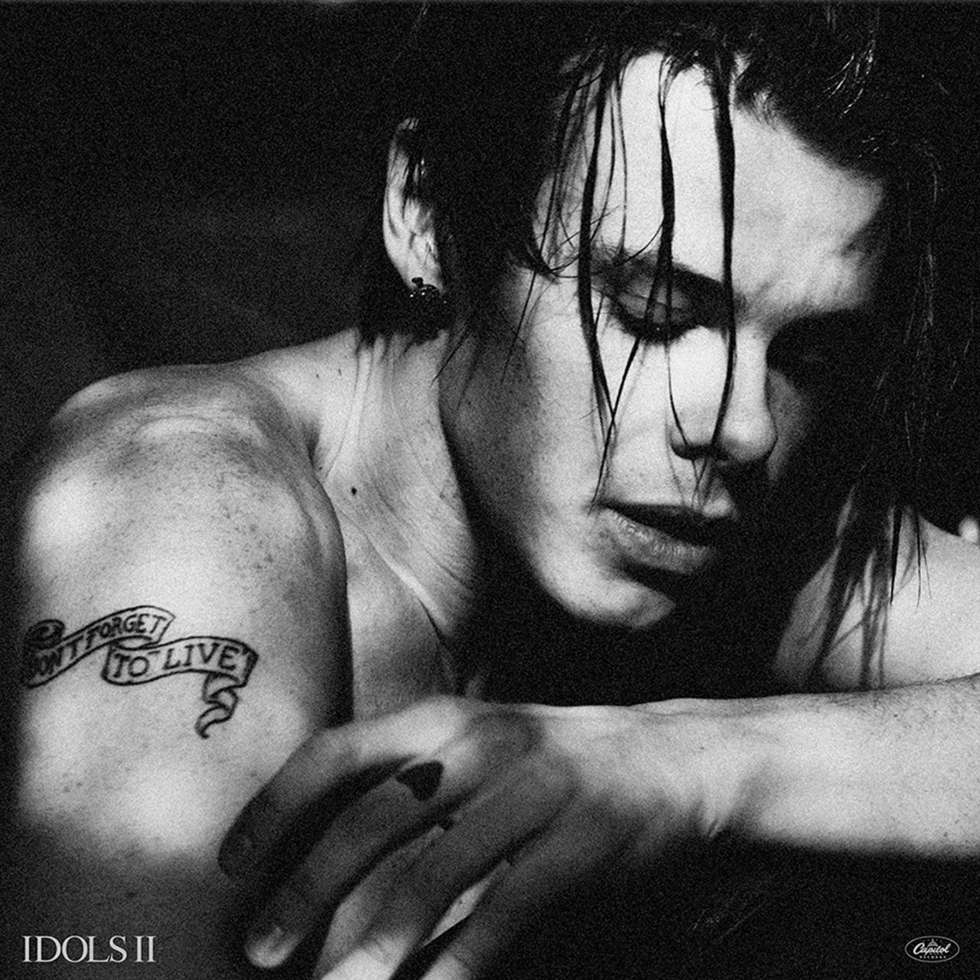
Yungblud ‘Idols II’ Physical LP Artwork. Image credit: Chuff Media
The second album begins with the distant sound of lapping waves, opening with the contrast between idolisation and intimacy, with lyrical symmetry to the album’s title track: ‘Pictures of idols / Rise up and fall / Wish you knew it all’. ‘I Need You (To Make The World Seem Fine)’ shows restraint first, before soaring into a string-filled, belted chorus. It’s an epic scale of proportions to live up to across the rest of the new installment… can Yungblud commit to his grand introduction?
It seems he actually has no intention to. The song peters out, following the same ebb and flow of the waves. Next, we’re hit with a rapid gear shift straight into ‘The Postman’, a pop-tinged classic rock track that’s characteristically full of attitude, with dry humour woven across its lyrics. It crosses a bridge that was made for stadiums to stamp to, along a central guitar riff that’s bright and energetic. Harrison’s diction is crisp, his voice strong and showcased at its best.
Grammy-award-nominated single ‘Zombie’ featured Florence Pugh in its poignant music video, and now it’s layered with heavier guitars and the old-school rock influence of The Smashing Pumpkins. It’s a timeless song that would work just as well as a stripped-back piano ballad. Here, the amped up instrumentals offer a max-loaded, full-frontal interpretation, although Harrison’s smoother grain better conveys the song’s depth than Billy Corgan achieves in his featured verse.
A necessary pause comes next, via acoustic interlude ‘Time’, though Yungblud’s vocals continue roaring over the guitar at full force. ‘Time’ sounds more like a demo or voicenote in the wider context of ‘Idols’, but it’s a refreshing pivot from an artist who’s made his name from maximalist, energetic rock. Perhaps this is proof that he no longer needs the fanfare to showcase a great voice, or that the success built from ‘Idols’ has earned him the respect for people to listen without it.
“‘Blueberry Hill’ feels like the double album’s more personal, private ending, as though Harrison is telling his younger self ‘you’ve done it… but don’t stop dreaming’. ”
‘War Pt. II’ is lighter and less anguished than its original version; one of the highlights from the June album. Yungblud’s voice still carries a real and raw pain, but it’s lifted with a beautiful strings arrangement, and turned into an echo of the sentiment that this album is about ‘realising that I am alive’. It feels far less ‘weighted’, both sonically and lyrically, and for the better. This version has the light and shade to allow the song to shine, rather than get lost in an interchangeable tracklist.
Penultimate track ‘Blueberry Hill’ is another acoustic turn, channelling piano chords of a Paul McCartney inflection, opening up to marching band brass and snare drums. It’s a real departure from Yungblud’s signature sound that speeds up, slows down, and speeds up again in a merry-go-round of musical theatre happy endings. And just when you think it’s over, an entirely different section reveals itself, as optimistic as the clouds parting to reveal a ray of sunshine after a particularly heavy burst of rain.
This track sounds like an indirect response to ‘Hello Heaven, Hello’ in structure and meaning. Ending with the echoed repetitions ‘Tell me what is it you seek?’ / ‘You’ll last forever’, it’s a circular and poetic response to the album’s cinematic opener and central lines: ‘I wanna feel alive’ / ‘I don’t know if I can make it’. ‘Blueberry Hill’ feels like the double album’s more personal, private ending, as though Harrison is telling his younger self ‘you’ve done it… but don’t stop dreaming’.
This epic era closes with ‘Suburban Requiem’, which has all the ingredients to become a 2020s ‘Bitter Sweet Symphony’ – it’s uplifting, epic and a celebration of the mundane treachery we call life. In its lyrics, another callback to ‘Idols Part 1’, specifically the adolescent troubles depicted in the brilliant ‘Ghosts’: ‘When you were small they’d call you useless / They took the laces from your shoes / You never learnt quite how to process /…But give it time / When you feel yourself about to lose control… / Feel yourself lifting off the floor’.
“Yungblud wasn’t set on becoming one through the making and release of ‘Idols I’. But by taking inspiration from those ‘on the wall’ in tandem with self-acceptance and an embrace of authenticity, he’s built a movement that hundreds of thousands identify with… inadvertently finding himself on the pedestal in the process.”
It’s an interesting oxymoron that imagery of heaven, spiritualism, and transcendence scattered across both albums feels more grounded in the album’s finale, moving from ‘we’ll be ghosts by tomorrow’ to ‘you know I’m gonna be right here’. Whether Yungblud is singing to his younger self, someone in particular, or his ‘army’ of fans, there’s an embodied confidence that was just beginning to flourish in the June tracklist of ‘Idols’.
Yungblud seems to have understood his rise to fame and the scale of the success he’s only just touching; internalising it with gratitude, shouldering the responsibility with grace.
*
Yungblud’s best tracks consisting the ‘complete edition’ are found on Idols I (as they needed to be), but Idols II completes the narrative arc of the album’s throughline. Yungblud wasn’t set on becoming one through the making and release of ‘Idols’. But by taking inspiration from those ‘on the wall’ in tandem with self-acceptance and an embrace of authenticity, he’s built a movement that hundreds of thousands identify with… inadvertently finding himself on the pedestal in the process.
Yungblud hits UK arenas from April, where he’ll be debuting these tracks live on tour for the first time.