
Vacations’ ‘Pursuit of Anything’ is about ‘trusting that uncertainty’
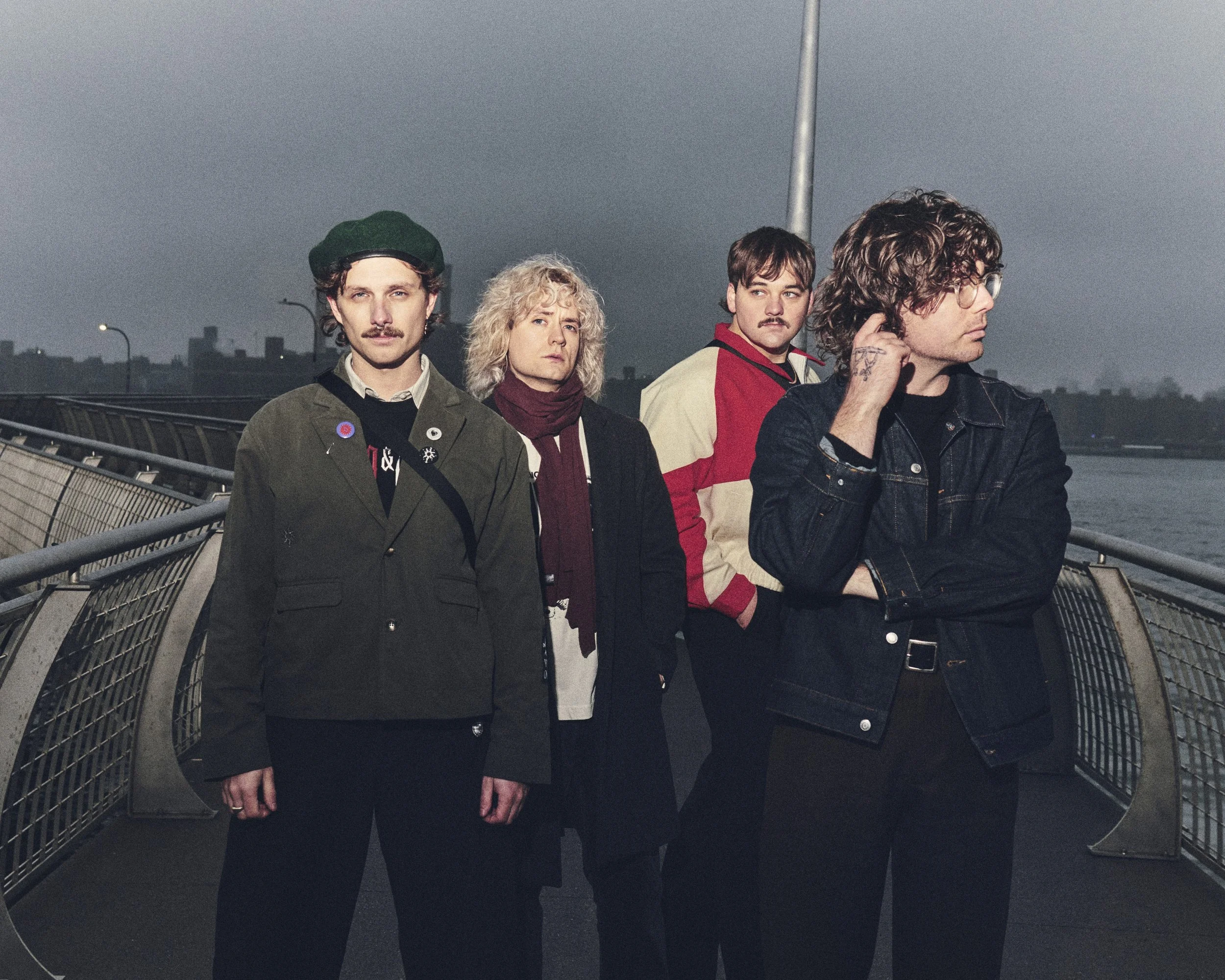
VACATIONS’ Campbell Burns talks to TOPNOTE’ on new album, ‘Pursuit of Anything’. Image credit: Andrew Boyle
‘We're kind of reaching this… coming of age, a second coming of age.’
Campbell Burns from Vacations is wandering around London. Not quite lost, but not exactly sure where he is either.
It’s not too different, we note, to the themes of the well-loved Australian band’s fourth album, ‘Pursuit of Anything’. Released on 4th October via Nettwerk Music Group, it’s an expansive LP that tackles ‘questions of identity’. As Campbell and his bandmates took some time off after majorly successful 2024 album ‘No Place Like Home’, to move to New York or Melbourne, get married, or become a father, Burns saw their paths diverging and their bonds strengthening.
At the same time, living as a stranger in a new city, he was reckoning with his own path — the journey that lay before and ahead of him. This process eventually led to the creation of the fuzzy indie rock record, formed between the band’s Australian hometown of Newcastle, recording studios in LA and Sydney, and Campbell’s Brooklyn apartment.
On a fleeting trip to the UK, with two intimate shows in London to mark Vacations’ album release, our jetlag-influenced conversation unravelled into a philosophical chat about how place shapes identity and music, timely endings, and the universal experiences that become distilled to personal, singular memories.
Read Campbell’s existential musings with TOPNOTE here.
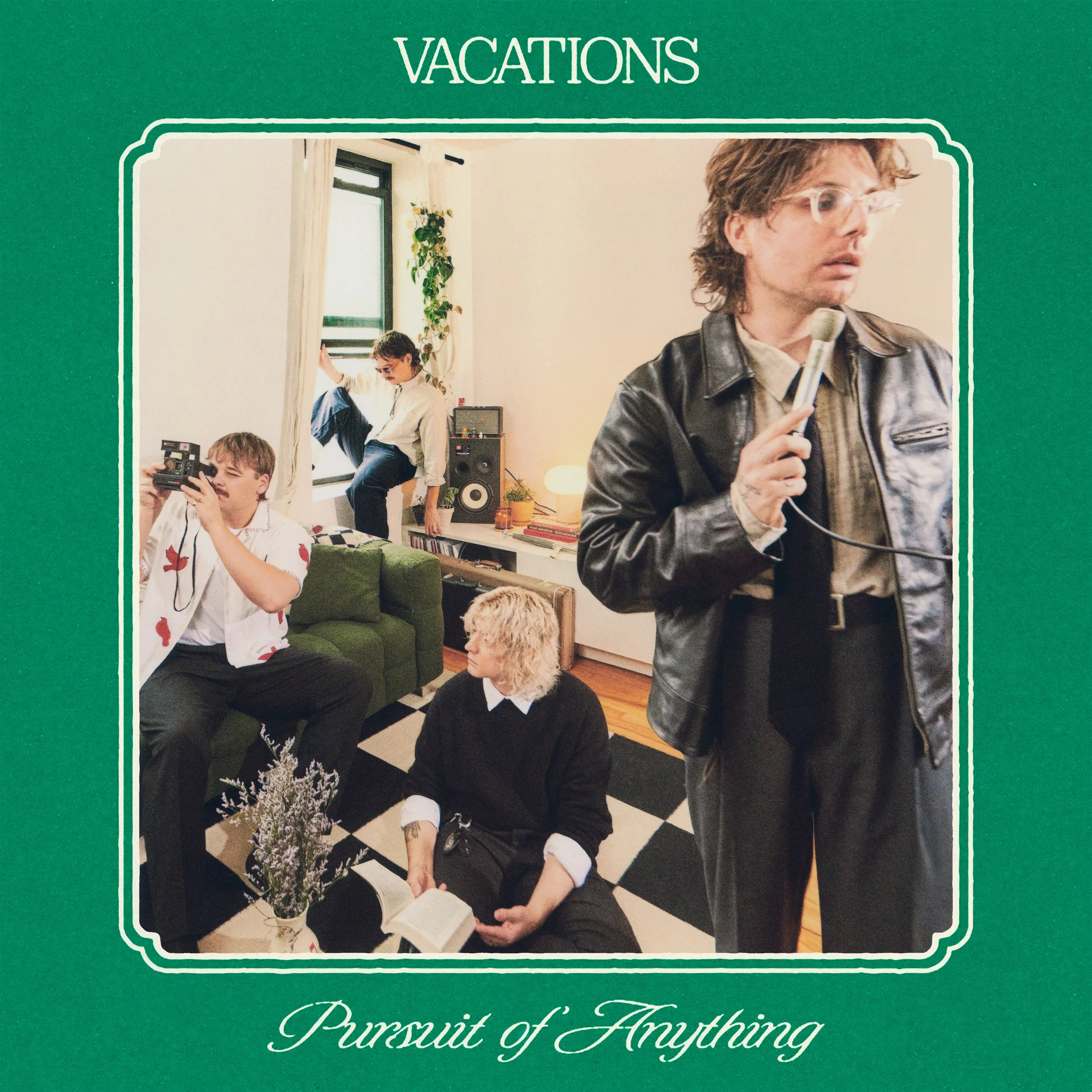
VACATIONS released ‘Pursuit of Anything’ earlier this month. Image credit: Nettwerk Music Group
This interview has been edited for clarity.
TOPNOTE: Your album was made between Sydney, Melbourne, LA and New York. How does where you are affect the music you make?
Campbell: I think it informs your creative process because of your day-to-day life. Everything I do away from a recording studio will dictate what I want to write about. I think your environment is pretty paramount. I felt very inspired living in New York and a lot of the songs on the new album are about my experiences living there whilst also reflecting on my hometown and seeing the lives of my bandmates now we're all veering into different directions.
Half our band is married. One of our members, Joey, is a father now, they're settling down in Newcastle, and I would say Australia as a whole is a much slower paced lifestyle compared to America, especially a city like New York; very chaotic and all over the place. Which I really like, I think it's very fun, but it's a lot more career-driven.
I'm very much honed in on my individual music career whether it's with songwriting and producing, as opposed to settling down and starting a family. It's not right or wrong, they're both very beautiful paths. But it's now at a point where we're kind of reaching this… coming of age, a second coming of age.
TOPNOTE: What were you thinking about in your ‘second coming of age’?
Campbell: I guess I was thinking whether or not what I was doing was the right thing, not that there's even really a moral round behind it. I just was pausing sometimes and thinking, should I be living in New York? Should I maybe go back home? Should I be pursuing this career path? Is this what I want to be doing for the next five to ten years? Reflecting on a lot of my life and especially the last ten years as a band.
“A lot of the songs on the new album are about my experiences living in New York whilst also reflecting on my hometown and seeing the lives of my bandmates now we’re all veering into different directions.”
Now being 31 and it's like, oh, I do have to think about these things. Do I want a family? Do I want to raise a family in the states? Would I maybe go back home? Do I want to go back home? Questions of identity, and what culture do I feel more aligned with these days. It’s just about being ok with it, and trusting that uncertainty.
TOPNOTE: In this album you've honed in your existential questions, but listening through, it's a very mellow and calming experience. Was that an intentional contrast?
Campbell: I wasn't necessarily looking to create something that would be an intense or disorientating listening experience. I think we did try to convey that though with the music video for ‘Holy Grail’, how it's very action-orientated against something that is quite soothing and relaxed. I knew I wanted this record to be in line with something like The Beach Boys, something that felt like a chamber pop record, having more lush, almost orchestral arrangements, more layered vocals.
TOPNOTE: There’s definitely an element of nostalgia in there. In ‘Punchline’, I really liked the lyric ‘there must be a thousand strangers like me here’.
Campbell: Yeah, that's the one song where I'm like, this is really sad!
TOPNOTE: I found it quite a comforting line, like we're all isolated and confused together.
Campbell: It's true. It's a very true experience. I have a lot of friends that have also moved, whether it's a city or a country. And hearing about how long it took for them to settle in, and actually feel like it was their home, it's all very relatable. That whole song is about myself and my first year in New York.
TOPNOTE: What has it been like to have your fans so welcoming on your return?
Campbell: It's always a surprise. I guess I feel like I need to see it to believe it. The record label will have analytics of how things are trending, that doesn't really mean that much to me anymore. They kind of just become numbers, but then when you actually see fans in person, you're like, these are actual real people that do care about our music.
“There’s a lot of things I could be better at. I could be a lot better at chess! I would love to get better at gardening, at painting, songwriting... There’s always something to be working on.”
And it's a really beautiful thing that I'm very grateful for. It's nice to have a real physical human experience tied to art.
TOPNOTE: The last song, ‘Lucky, Forever’, you said you wrote after attending two bandmates’ weddings, and wanted something cliché but also really earnest… I don't think that song sounds cliché at all!
Campbell: Thank you! Well I've never used the lyric ‘baby’ in any song and I think so many love songs, especially when you think of Motown and anything from the '60s, '70s, the whole song is just ‘oh, baby’ over and over again. You can even hear that in pop music today.
And it feels really lame to me to use the word like that, but I was thinking, I want to be earnest, I want to be genuine. Why not just say something that is to the point and not contrived or verbose in its lyrics. I didn't want to try and hide it in metaphors or analogies. I was like, I’m just gonna write a really sweet love song.
TOPNOTE: What made those two experiences the thing that made you decide, ok, now I'm going to write a love song?
Campbell: It put quite a lot into perspective for me and it made me realise how beautiful marriage is. Not that I didn't necessarily think so before, I just didn't really get the concept, especially a traditional wedding with a father walking the bride down the aisle and the vows and everything.
But seeing that, I was like, oh, true love is beautiful. It's one of the most human experiences you can have, I was like, this is amazing, this rocks. I aspire to have that experience now. I know it happens to a lot of people around the world but seeing people you know actually go through it, it makes you think.
TOPNOTE: What do you think is the difference between cliché and timelessness?
Campbell: …I'm like, do they go hand in hand? I don't know. I mean, if something is cliché, I feel like it is inherently timeless, because it can exist as a cliché, as something that everyone is at least aware of? Obviously there are things that are more artistic that would be timeless. But I would say even for that, those things will inevitably become cliché or watered down, through culture or people trying to adapt or copy… I think that's my take.
TOPNOTE: The album's called ‘Pursuit of Anything’... if there was anything you could be good or better at, what would it be?
Campbell: There's a lot of things I could be better at. I could be a lot better at chess! I would love to get better at gardening, at painting, songwriting. It could be communicating, whether with my friends or in romantic relationships. There’s always something to be working on. Which, rather than daunting, it can be fun, something to work towards, and eventually feel a sense of achievement when you get there.
TOPNOTE: Well that’s all I wanted to ask you… I didn't want to ask all the questions I'm sure you get asked all the time.
Campbell: You haven't asked what inspires you or how did the band start… which are the worst questions (laughing).
TOPNOTE: Maybe a better question is how do you think the band will end!
Campbell: I think—
TOPNOTE: Wait, no no, you don't have to answer that!
Campbell: No, but I think things should come to an end! There is nothing worse than anything that drags and starts to become redundant or a mockery of what it once was. I think it's great when bands are like, hey, we put out two or three really good albums, I think we're just gonna call it.
I feel like we’d all know when it’s time, but how’s it going to go down? I don't know. That's a good question honestly… because if I started a family I don't think I would want to necessarily continue touring. It would change the whole trajectory of the band. I do think about it, but not in a way of oh, I want it to end. But I don't want to be past the age of 50 and still on stage rocking out to songs I wrote when I was 18, that just doesn't sound fun!