
Grapefruit: Queenstown Collective Talk The ‘Bitter & Sweet’ oN Debut EP
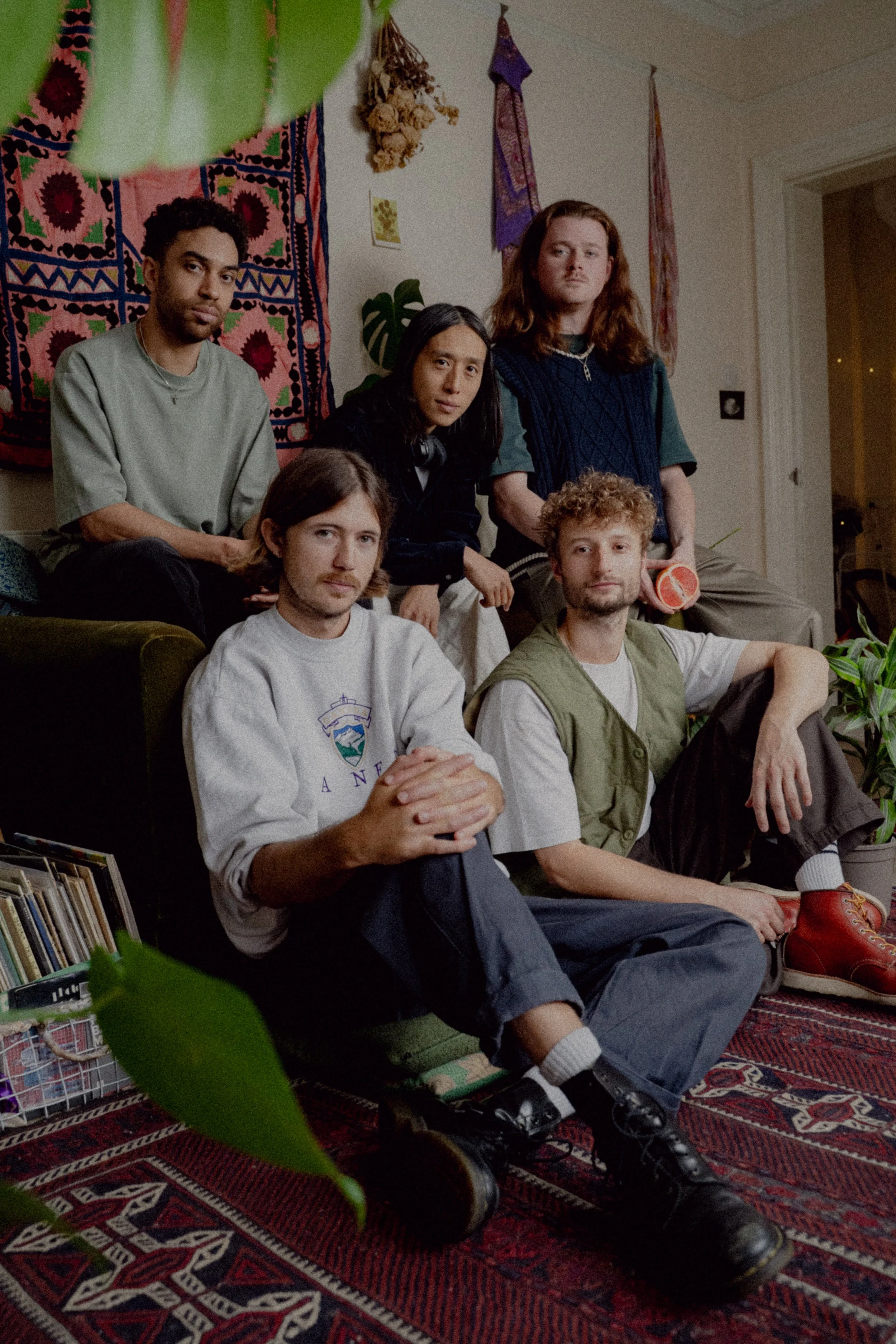
London jazz band, Queenstown Collective, interviewed by TOPNOTE. Image credit: Anna Francesca Jennings
‘Grapefruit’ represents a lot about our music. It's very bright and fun in a lot of ways. But also we reference the bitter side of living in London.’
Queenstown Collective is the amalgamation of an arcade metal claw that’s picked and plucked its members from a sea of talent composing the London jazz scene. As regular collaborators with Joe Armon-Jones, Nubiyan Twist, Mom Tudie and Theon Cross, and frequent performers at Ronnie Scott’s & Love Supreme festival, its players are firmly embedded in a blossoming field of UK jazz music.
When founding member James Morgan decided to concentrate the key players from his Ritzy-based jam session, the bones of the Queenstown Collective band were formed. Tomorrow, their debut EP ‘Grapefruit’ is released, a colourful riot of music with a collaborative ethos.
TOPNOTE spoke to drummer James and saxophonist James Akers, about the origins of the band, inspiration behind the EP, and how it feels to be part of a reinvigorated British jazz movement.
Read the full interview below.
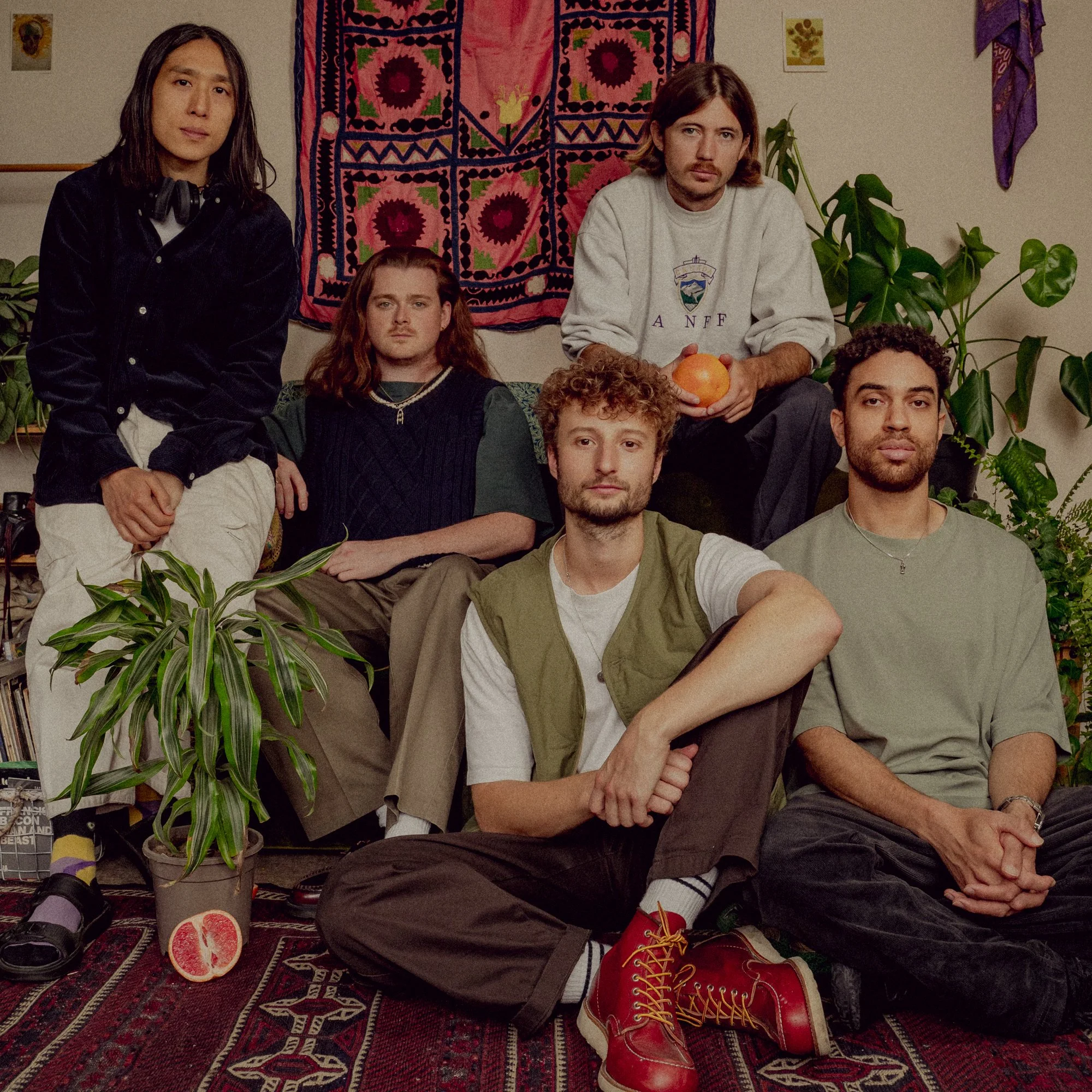
Queenstown Collective, ‘Grapefruit’ EP artwork. Image credit: Anna Francesca Jennings
This interview has been edited for clarity.
Interviewer: Hi! Would you like to introduce yourselves?
James Morgan: We are Queenstown Collective, a modern jazz band.
James Akers: A bit of neo-soul vibes, if you want to pigeonhole it. We're promoting our new EP. It's called ‘Grapefruit’. We worked very hard on it, and we're really excited to share it.
Where did the name for the EP come from?
Morgan: We wrote the lead single ‘Grapefruit’ in the summer and I remember being in a really hot studio when we finished it. We were getting refreshments, and the name just came to me. It was a really hard song to write, so it just felt right with the bitter and sweet of the release of writing it. I feel ‘grapefruit’ represents a lot about our music. It's very bright and fun in a lot of ways. But also we reference the bitter side of living in London.
Akers: We've got the darker moments in there. I really enjoy that about playing in the band, to have the joyful moments in the music and then to be able to properly dig in and express.
Morgan: And I feel we have that on stage as well. We take the audience on a journey with that. We're cracking up one minute and then the next…
Akers: Yeah, eyebrows down, let’s get serious!
You’re referencing ‘the bitter side of London’, but a lot of the EP is instrumental. How do you convey those emotions?
Morgan: It's mainly in the mood of the music. Definitely the lyrics in the song ‘City Lights’ highlights it. I think everyone who lives in London has a difficult relationship, we both love it and we hate it. There's lots of reasons to be here, but it's also expensive and stressful, people aren't nice… it's all a bit difficult.
But also ‘The Temple’. The thought process behind that song was a venue called 91 Living Room we played at a lot – that was essentially our temple. The music communities in London… however tough stuff gets, we have those little sanctuaries.
Akers: The band actually began in a space that James curated. It’s where we established our connection. The Queenstown Jam sessions were a real safe place for us to come together, make music. That was a really beautiful community. And then at a certain point, you made the decision to say it's time to distil this. So me, Eddie [Lee], Tjoe [Man Cheung] and Luke [Wynter] are all characters from that community.
Can you give some extra context around the jam sessions, and what led to you forming a band?
Morgan: Basically, there was a time in my life where I was looking for more stuff to be going on. I felt a calling one day to start a jam session. I was doing it every other week and then lockdown happened. During that time I was like, actually, I’ve really missed this thing I've been doing as a little side hustle, I'm gonna put more energy into it.
It was one of the first things happening out of lockdown, I think it was the only jam session in South London at the time. We moved it to The Ritzy in Brixton, every single week, for about a year and a half. It started to build a bit of a movement, we had some amazing times, and I think at some point I took a step back from it, recalibrated. I put together the people I knew would be down to make it a project and we leant in and started writing music together, taking inspiration from what we were making at the jam.
Akers: I've been in quite a few communities based around jam sessions and each one has a distinct vibe and you can sometimes get similar combinations of characters, but because it's a different place with a different energy, the music will be different. We as an ensemble have done our best to conjure and cultivate that vibe again, and carried the sound that we found in that space forwards.
“All you can do as an artist is be as true to yourself as you can be, because in doing so, you’re telling the time of where you are and who you are and what life is like for you, and you know you’re going to connect with other people experiencing the same thing. ”
Who is your music for?
Akers: I think it's for us man. We're making music because we love making music, it's very much that feeling of what would be exciting? What should we do with this?
Morgan: I rate that answer because, well Dijon's a good example, right? I went to Dijon's show the other day and it felt so much like music that’s made because he loves making it, it's so passionate.
Akers: All you can do as an artist is be as true to yourself as you can be, because in doing so, you're telling the time of where you are and who you are and what life is like for you, and you know you’re going to connect with other people experiencing the same thing.
What do you love about the London jazz scene, and what makes you stand out from it?
Morgan: It just feels very free and in a very special time, and I think it brings jazz back to what it was originally. I think jazz at some point became stuffy and contrived. It's gone back to this joyous explorative nature where people are melding loads of different styles, dance music, breakbeat, drum and bass, electronics, synthesizers, and that just feels exciting and new, both partaking in it and listening to it.
“We’re trying to take things a level up where it’s got the atmosphere, the vibe, but there’s more composition. There’s more punch. There’s something that hooks you in straight away.”
Akers: We're in a unique position in the UK to make jazz in a certain way. Jazz has been quite heady for a long time and a lot of the jazz coming out the UK is very body. It's very, I can move myself to this, going back to a feeling. Obviously Jazz is a uniquely African-American music, and that's really important. We're over here in the UK, and the influence and experience is different. I feel maybe some members of generations before us in this country have done a lot of trying to emulate what's been happening in America? And in recent generations, we've been trying quite hard to find our own thing.
Morgan: In London, especially, there's such a melting pot of culture. And how do we stand out? We're trying to take things a level up where it's got the atmosphere, the vibe, but there's more composition. There's more punch. There's something that hooks you in straight away.
How did the collaborative process work for the features on your EP?
Morgan: So Plumm features on the last track on the album, we've been friends for many years. And then Poppy [Daniels] was an original Queenstown Jammer. We met there and the rest was history. And then Johnny Woodham, JSPHYNX, who features on the lead single ‘Grapefruit’ is an absolute beast. Brought him into the jam one day and he started playing, and he was unbeatable.
What’s an iconic venue you’d love to play?
Akers: Man, we gotta get out to Jassmine in Warsaw. It’s the best club, it's in the basement of a Nobu hotel and they put you up in an amazing suite, it's all top of the line equipment, lots of free cocktails… you can see what we care about!
Morgan: We would have to be a pretty big jazz band to play here… but Red Rocks in Colorado. That's my number one bucket list, or anything that's an amphitheatre.
What would you say to people who are turned away from jazz, or don't understand it?
Akers: There's a lot of stigma against jazz that it's all wrong notes… you can tell I grew up around some classical musicians. People think jazz is either really high brow, or it’s not highbrow enough. Come to a gig! Come to a gig… and if you don't feel excited, if you don't feel enticed, if you don't catch the energy that we're trying to give out… then go on hating jazz. But I challenge anyone to come to a show and not feel that experience.
And where can people come to a show?
Morgan: The next show is Pizza Express Soho on 5th March, that’s the EP launch. I think this leads back to your earlier question about who the music is for, I do want it to appeal to people who ‘don't like jazz’. I feel like a lot of the time we're not making jazz… we're making music. I think just giving it a try is the first thing anyone should do.
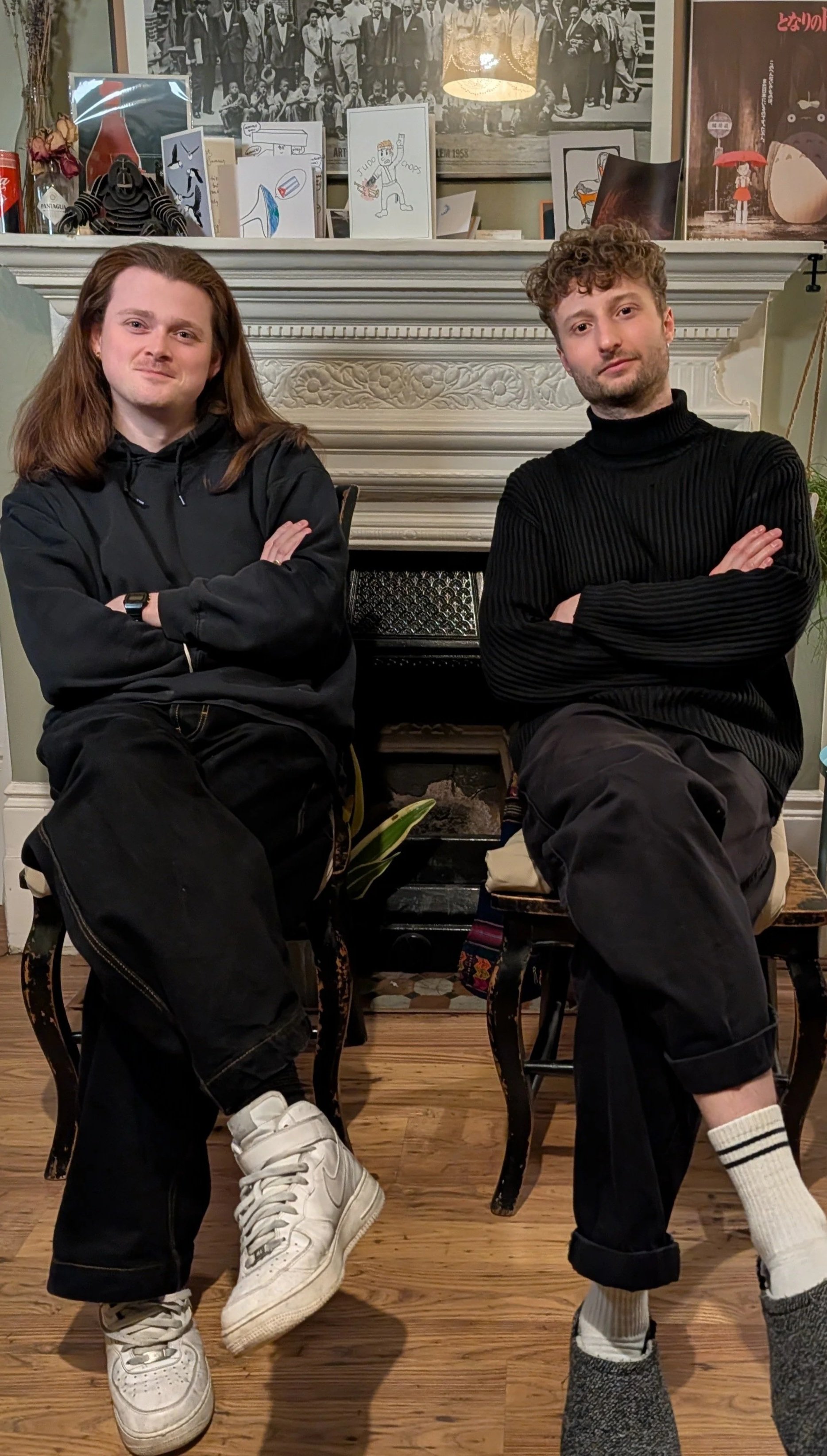
James Freddie Morgan (left), drummer and bandleader, and James Akers (right), saxophonist of Queenstown Collective in conversation with TOPNOTE. Image credit: TOPNOTE