

Nick Ward releases ‘Year Of The Snake’. Image credit: Good Machine PR
‘Nick Ward has found gold with ‘Year of The Snake’ – the worst of times giving way to a record that will undoubtedly be the beginning of something much bigger.’
There’s something deeply rewarding about listening to the new Nick Ward record - as the baton is passed on through Australia’s lineage of brilliant pop exports. ‘Year Of The Snake’, arrives crystal clear in its identity; one that powers through the past ten years of indie pop music and lands somewhere completely fresh, delivered with a voice that remains individual.
‘Year Of The Snake’ is at its core indie-pop, though it borrows from folk, electronic music, soul, indie-rock and even classical compositions to achieve its entirely new sound. It’s possible to pick out various sonic touchstones, from The Beach Boys’ ‘Pet Sounds’, to moments akin to Djo’s ‘The Crux’, but don’t let that reduce the artistry at play here. From explosive piano hooks to electronic drum crescendos, ‘Year Of The Snake’ spins out as a young man falls into life’s darkest moments, and makes a whole lot of noise as he goes down.
Released on Friday via EMI Music Australia, keep reading for TOPNOTE’s full review.
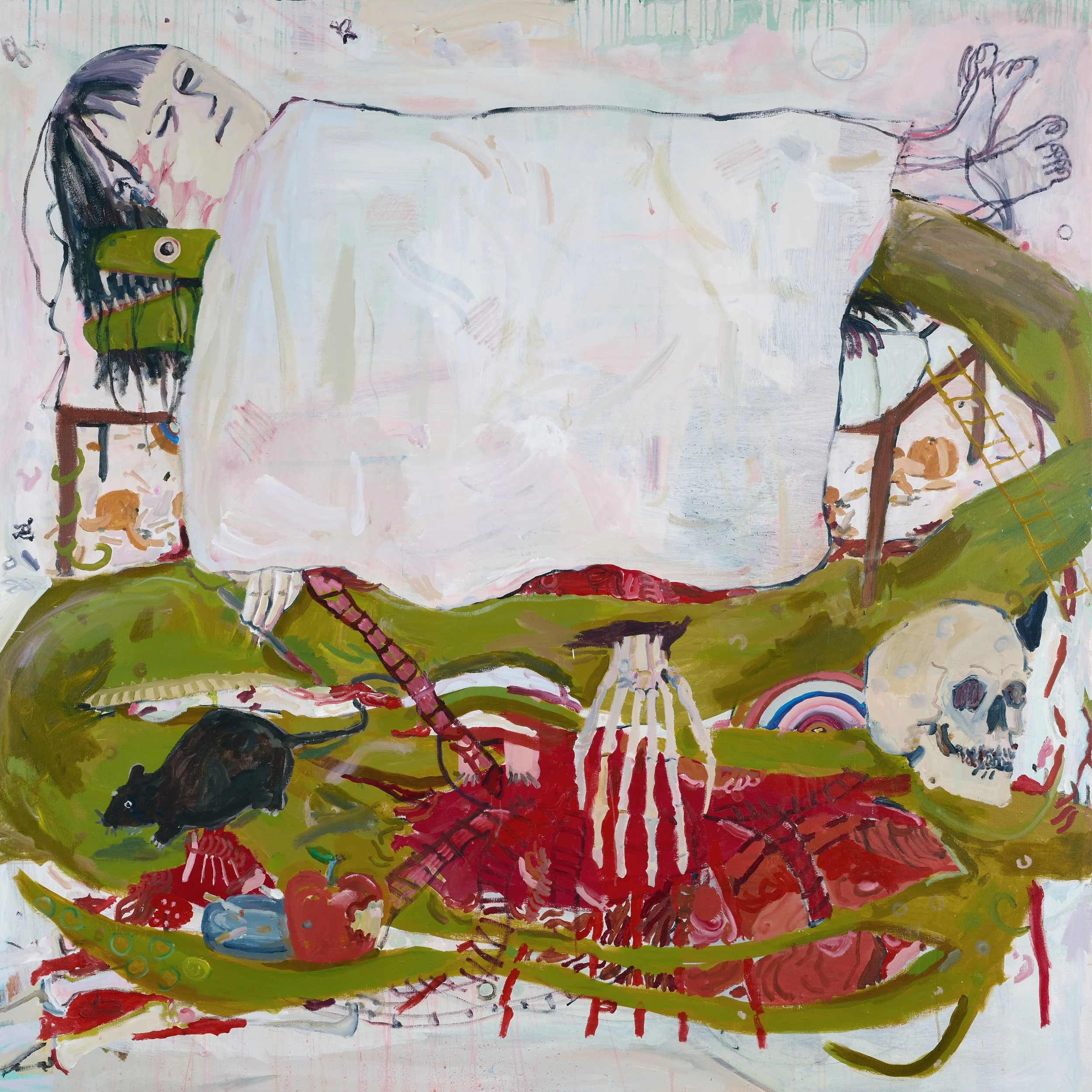
Nick Ward ’Year Of The Snake’ album artwork. Image credit: Good Machine PR
‘Year Of The Snake’ is the sophomore record from Sydney-based Nick Ward, and its brilliance should come as no surprise.
At just 25, Ward already has a writing credit on Troye Sivan’s 2024 smash-hit record ‘Something to Give Each Other’, followed by an opening slot on the Aussie leg of the megastar’s tour. He is also a producer for electronic group The Avalanches, working with Weezer’s River Cuomo in the process, and has a critically acclaimed debut album under his belt with 2024’s ‘House With The Blue Door’. And he scored 2025 film, ‘Jimpa’… he’s been busy.
To date, Ward’s career has taken a self-defined “hamster-wheel” approach, without any real sense of a break since he started at 18. This sophomore record changes tack however, with Ward wanting to make music that felt messier, and freer, allowing room for error. Aiming to make something less literal, and instead chasing the feeling of a difficult ascent into adulthood, Ward’s ‘five-day writing retreat’ in New Zealand turned into a three month stay, where much of the album was rounded out.
“Written in response to what Ward has described as “the toughest year of my life”, ‘Year Of The Snake’ slowly reveals itself as an attempt at answering some of life’s pretty big questions, unravelling through a sprawling constellation of genius pop melodies. ”
Navigating a series of personal crises alongside tumultuous global headlines, yet far enough away to bring some wider perspective into his songwriting, the album replicates the feeling of flicking between daydream and anxiety: “I wanted to attack the feelings of things — to get to the truth in a different way.” Written in response to what Ward has described as “the toughest year of my life”, ‘Year Of The Snake’ slowly reveals itself as an attempt at answering some of life’s pretty big questions, unravelling through a sprawling constellation of genius pop melodies.
Both previously released as singles, opening tracks ‘Making Time’ and ‘Piano’ act like a second coming of peak-2010s Vampire Weekend, a band whose inspiration ripples through the album. Ward’s talent as a multi-instrumentalist makes these songs instantly magnetic, with the latter, ‘Piano’, depicting Ward’s deteriorating mental state through the very thing that makes the record so alive – his musicality. ‘All the things I’d give to play piano again’, is a desperate cry imagining what would happen if a piano fell on his head, whilst sampling a Glenn Gould recording of a Bach composition. If it wasn’t already clear, this is not a minimalist album…
‘In my Head’, gives way for a scrappy, crunchy spin through psychedelia, before the album explodes into latest single ‘Jenny’, which somehow isn’t already a bigger hit. With its playful, infectious falsetto chorus, and a music video that could rival the eccentricity of pop’s wonder child Audrey Hobert, ‘Jenny’ is a rock-solid, crooning, indie love song.
The breakdown of Ward’s personal life truly begins to rear its head at the album’s mid-point. ‘Hands’ is a more looming take on love that echoes various shades of Troye Sivan’s confessional songwriting. ‘The Boy Who’s Seen It All’ starts off as sullen bedroom-pop, before janky piano chords come bursting through the door. The song continues to follow this verse-chorus tug-of-war between self-pity and bravado, and makes clear the internal tussle at play in the core of the album’s exploration. ‘I can see why my love left you starved’, Ward concludes regretfully, before flipping the song once more into an ending suddenly charged with buoyancy.
The myth of Orpheus is a cornerstone of this record, with the prophet’s journey into the underworld acting as a mirror to Ward's personal descent into the weeds of mid-twenties life. He described ‘Year Of The Snake’ as ‘music-making as an act of survival’, insisting on pushing forward despite emotional upheaval, a sentiment echoed most directly on slow-burn ‘Do What You Have To’: ‘You know I’d change my life if it meant I could have you / guess I’m gonna do what I have to’.
“The myth of Orpheus is a cornerstone of this record, with the prophet’s journey into the underworld acting as a mirror to Ward’s personal descent into the weeds of mid-twenties life.”
As the record unfolds, a broader theme of what it means to come of age through the past two decades rises to the surface, as Ward struggles to grapple with a time period defined by its relentlessness. “These are difficult years that we're experiencing and I wanted to make something that feels like a salve to that” he said of the album’s creative process.
This philosophy is executed most clearly on Ward’s search for meaning and answers on the cleansing title track, and closing song, ‘Year of The Snake’, a reference to 2001’s Year of the Metal Snake in the Chinese Zodiac. ‘I was born in the year of the snake / a long time ago but a little too late / I haven’t known peace since 2008 / beginning of the end just like New Year’s Day’, is the mantra repeated throughout the song. In conjunction with the album’s release, a live performance recorded in Sydney’s Château Wah Wah sees the song sprawl into a full eight-minute version, reflecting the record’s consistently exciting musicality and showcasing the true extent of Ward’s musical talents.
As ‘Year Of The Snake’ winds down, the album’s back half sees Ward at his loosest and consequently most exciting, with ‘Oh, Paloma!’s earworm guitar hook and ‘For You’s Brian Wilson-esque vocals immediately infectious; both acting as the ‘salve’ to Gen Z growing pains he set out to create.
It’s clear that through his search in the underworld, Nick Ward has found gold with ‘Year Of The Snake’ – the worst of times giving way to a record that will undoubtedly be the beginning of something much bigger.